Five Years After the Tornado: Humanitarian Organizations and Foundations Donated a minimum of CZK 1.3 billion in Aid to South Moravia
Published: 24. june 2026
Czech humanitarian organizations and foundations have published the aggregate results of the impact of the aid provided after the tornado that struck South Moravia five years ago. According to their own figures, they provided at least CZK 1,312,513,046 to address the consequences of the disaster. The money was used for immediate humanitarian and psychosocial aid, support for families, interventions in the area of community life, and the restoration of public space. Preparatory measures for further potential disasters were also taken. Thanks to the coordination of the charitable sector, which was unprecedented in response to the impacts of the tornado, the money was disbursed quickly and efficiently. The close cooperation that the organizations tried out after the tornado was later repeated in coordinating aid during floods and in other crises.
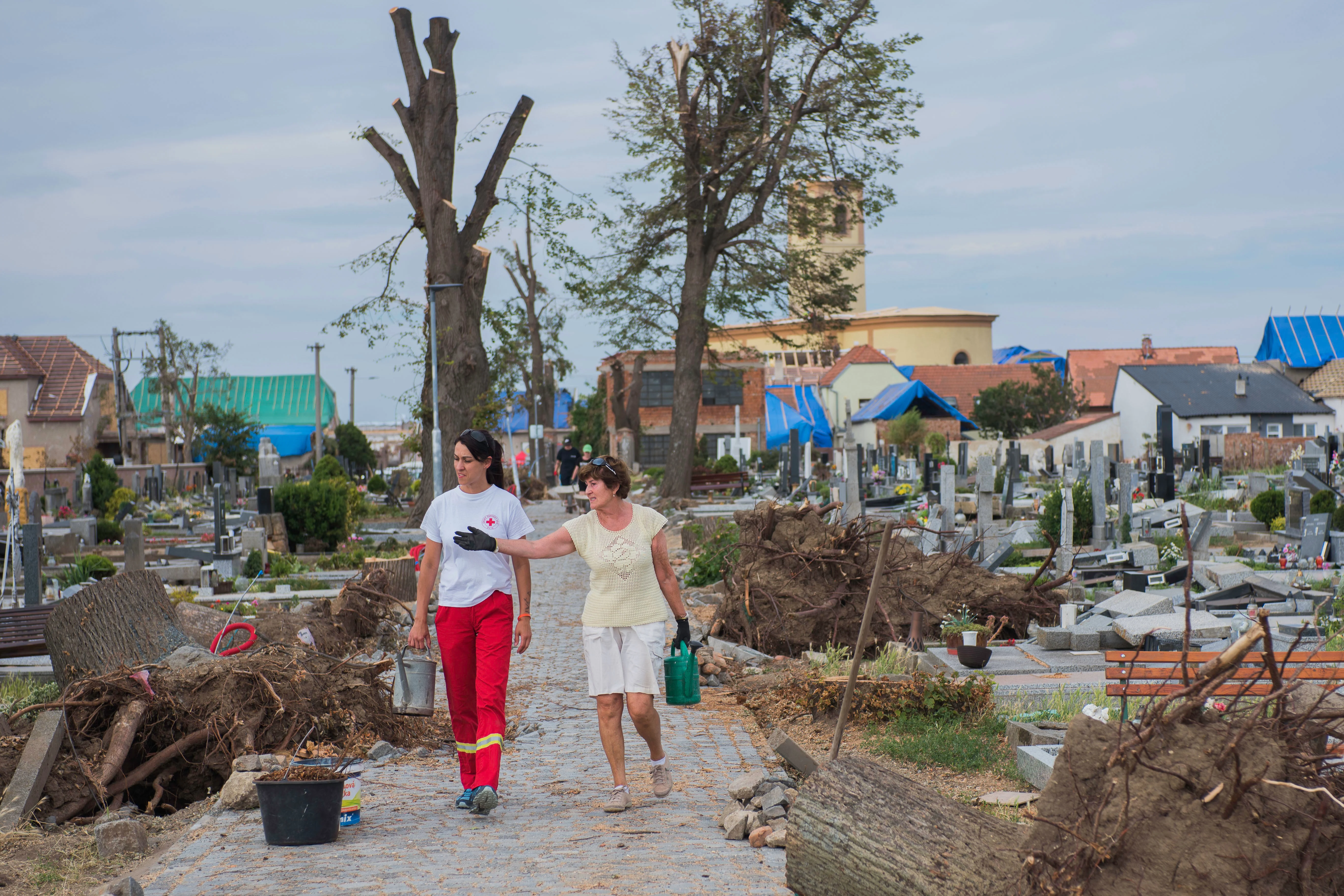
The number of humanitarian non‑governmental and private organizations and foundations that became involved in connection with the most severe meteorological event in Europe runs into the dozens. For this reason, it was necessary to fine‑tune common coordination procedures, share information, and respond according to the current needs of people in individual municipalities.
This unified front eliminated operational redundancies and guaranteed that aid reached the most vulnerable populations. Furthermore, this inter‑agency alliance endured long after the initial relief projects concluded.
This unified front eliminated operational redundancies and guaranteed that aid reached the most vulnerable populations. Furthermore, this inter‑agency alliance endured long after the initial relief projects concluded. The sustained cooperation, systematic knowledge sharing, and newly forged coordination mechanisms have proven invaluable in subsequent emergencies. Consequently, the Czech humanitarian sector is now equipped to respond with greater agility, heightened efficiency, and a strengthened focus on the long‑term resilience of affected communities. Such cooperation on the financial distribution of aid was reactivated during the floods two years ago in the Jeseník and Opava regions.
It is precisely for this reason that humanitarian organizations warn that reducing state support for crisis and humanitarian work may weaken this hard‑won preparedness. If organizations do not have the resources to maintain experienced teams, train volunteers, and create coordination mechanisms, aid during future emergencies may be slower, less efficient, and harder for affected people to access.
“Humanitarian organizations undertook a monumental task in the aftermath of the tornado,” observed Jan Grolich, Governor of the South Moravian Region. “Their intervention extended far beyond those critical first hours, rooting themselves in the region for years afterward. In doing so, they played an instrumental role in rebuilding homes and restoring a sense of normalcy to our municipalities and their residents. I extend my deepest gratitude to them. Their collaborative spirit, profound professionalism, and rapid deployment capabilities were of immeasurable importance to South Moravia.”
People in Need
People in Need formally concluded its operations in South Moravia this past May, having channeled over CZK 192 million into the ravaged region. These vital funds were mobilized through the SOS Morava collection, augmented by contributions from institutional partners and donors.
“During the tornado, together with other organizations and components of the Integrated Rescue System, we tried out close coordination of aid. We divided up the individual municipalities and operational specializations, and jointly set methodologies for disbursing support so that they would be the same across the territory,” explained Tomáš Urban of People in Need.
In the first weeks after the disaster, the organization delivered critical material relief, subsidized the reconstruction of over 600 households, and allocated CZK 5 million to each of the five most devastated municipalities to restore public property. Field operatives simultaneously provided vital psychological, social, and debt counseling, later expanding their focus to underwrite the recovery of local trades and small enterprises.
Transitioning beyond immediate reconstruction, People in Need pivoted to bolstering the region's long‑term environmental resilience. The organization financed the planting of over 23,000 trees and shrubs, spearheaded the development of municipal climate action plans, and drove landscape restoration initiatives designed to retain water and mitigate flash flooding.
“The prevailing climatic trajectory of this region leans heavily toward severe drying,” noted Magdaléna Davis, Head of Climate Programs at People in Need. “Consequently, we supported projects in every municipality dedicated to water retention in the landscape, green infrastructure revitalization, and the formulation of robust climate adaptation strategies.”
ADRA
In the first days after the disaster, the humanitarian organization ADRA deployed volunteers and utilized a proprietary application to meticulously map the scale of the destruction. The organization orchestrated the deployment of volunteers and skilled tradespeople based on targeted household requests, managed a central information hub, and secured material supplies in partnership with the corporate sector, all while delivering critical psychosocial support. Launching a public appeal in the storm's immediate wake, ADRA raised CZK 73.9 million over a twelve‑month period, delivering direct financial assistance to 250 devastated households.
To rigorously evaluate the efficacy of this response, ADRA commissioned the research firm SocioFaktor in 2023 to conduct a comprehensive impact study. The research found that as many as 90% of people in the affected area made use of financial aid and that the quality of life of local residents gradually improved, even though it did not reach the pre‑disaster level. While financial stability showed the most marked improvement, the restoration of public spaces and the mending of communal bonds remained ongoing challenges.
“The event was a breakthrough for us as it was something completely different from what we are accustomed to. The solidarity was enormous, we raised an exceptional amount of money, and it turned out that the key to success lies in cooperation. I would like to emphasize that when the public wishes to provide rapid assistance, the most effective form is to contribute financially through organizations actively operating on the ground. Such organizations know well what the current need is and try to distribute the funds as fairly as possible,” reflected Jitka Molatová, head of the ADRA Volunteer Centre Břeclav, who spent several months working in Moravská Nová Ves.
Czech Red Cross
The Czech Red Cross launched operations in South Moravia immediately post‑impact, embedding humanitarian support directly within the shattered municipalities. In addition to the immediate response which included medical care, psychosocial support, and even a mobile veterinary clinic, the organization systematically addressed the disaster's protracted consequences. A remarkable CZK 120.5 million was mobilized through the Humanity Fund to underwrite these regional recovery efforts.
Crucially, this funding capitalized the Demolition project, directing CZK 42.8 million to support households facing total or partial structural condemnation. Through this initiative, 170 families received essential grants of CZK 250,000. Subsequent intervention was channeled through the Roof project, which delivered CZK 54.8 million to 1,013 households battling severe structural damage to their homes. The Red Cross also subsidized the expert structural assessments mandated for state reconstruction subsidies; under the Assessment project, CZK 6 million was distributed across 1,206 households. Furthermore, to restore essential municipal infrastructure falling outside traditional funding streams, CZK 7 million was allocated to the municipalities of Hodonín, Hrušky, Lužice, Mikulčice, Moravská Nová Ves, and Stebno.
“The tornado demonstrated that effective aid extends far beyond the first hours and days following the disaster. Equally important is the ability to remain in the area through the further phases of recovery, to respond to the changing needs of those affected, and to cooperate with other organizations. It is precisely this experience that strengthened the preparedness of the entire humanitarian sector for further emergencies,” states Iva Jelínková, commander of the Central Crisis Team of the Czech Red Cross.
Diocesan Charity Brno
When the devastating vortex leveled hundreds of homes across five South Moravian municipalities, Diocesan Charity Brno deployed personnel from the very first moments, maintaining an active field presence until the end of 2022. Launching an urgent public collection, their operatives engaged in immediate debris clearance, administered psychological triage, and streamlined volunteer logistics. The following public response was historic, generating CZK 363,609,577. The charity ultimately disbursed CZK 313,224,609 directly to affected households, executing 2,997 distinct donation contracts.
Diocesan Charity Brno was among the first to respond after the disaster in South Moravia. Its workers cleared the debris of destroyed houses, provided psychological support, and helped with the coordination of volunteer work. After securing acute aid for the people affected by the tornado, they began to focus on long‑term assistance. They carried out surveys in households, organized the signing of contracts, and seerved as critical information liaisons. A tornado committee convened regularly, leveraging these ground‑level surveys to allocate funds to specific people for exact needs.
“It is good that not all the funds were paid out right at the beginning. We continually carried out further follow‑up assessments, and people kept coming forward who had initially been afraid to apply for financial aid,” states Miroslav Doležel, head of the emergency team of Diocesan Charity Brno.
The remaining funds from the collection were placed in a Fund for Future Emergencies. Money from the fund is meant to be provided to victims of further unexpected events, crisis situations, mass disasters, natural catastrophes, and similar misfortunes, a capability effectively demonstrated when these funds were activated during the severe floods in the autumn of 2024.
VIA Foundation
The VIA Foundation launched a collection on the Darujme.cz platform that amassed over CZK 248 million, rapidly deploying 78% of these funds toward immediate municipal, familial, and commercial relief. However, the foundation recognized that the tornado’s destruction extended far beyond physical infrastructure, fracturing municipal operations, neighborhood cohesion, civic meeting spaces, and the protective green landscape.
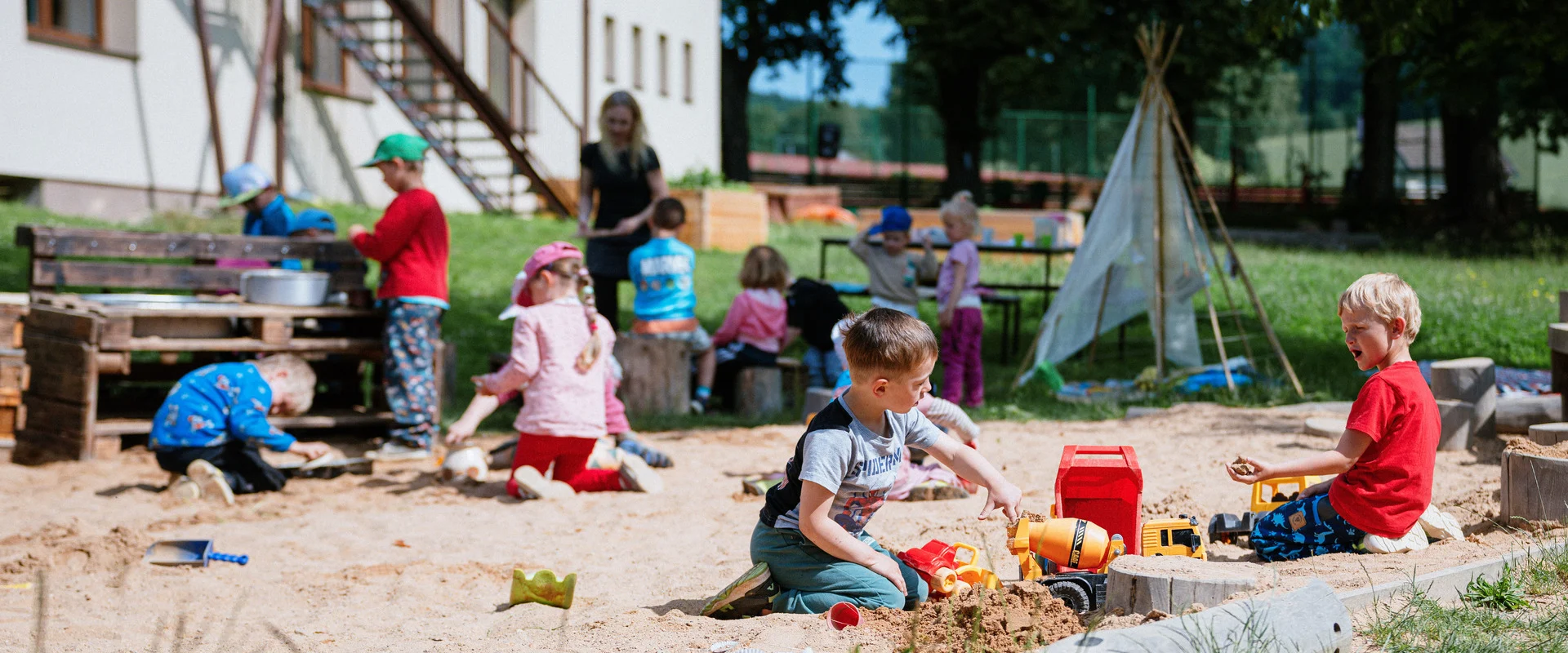
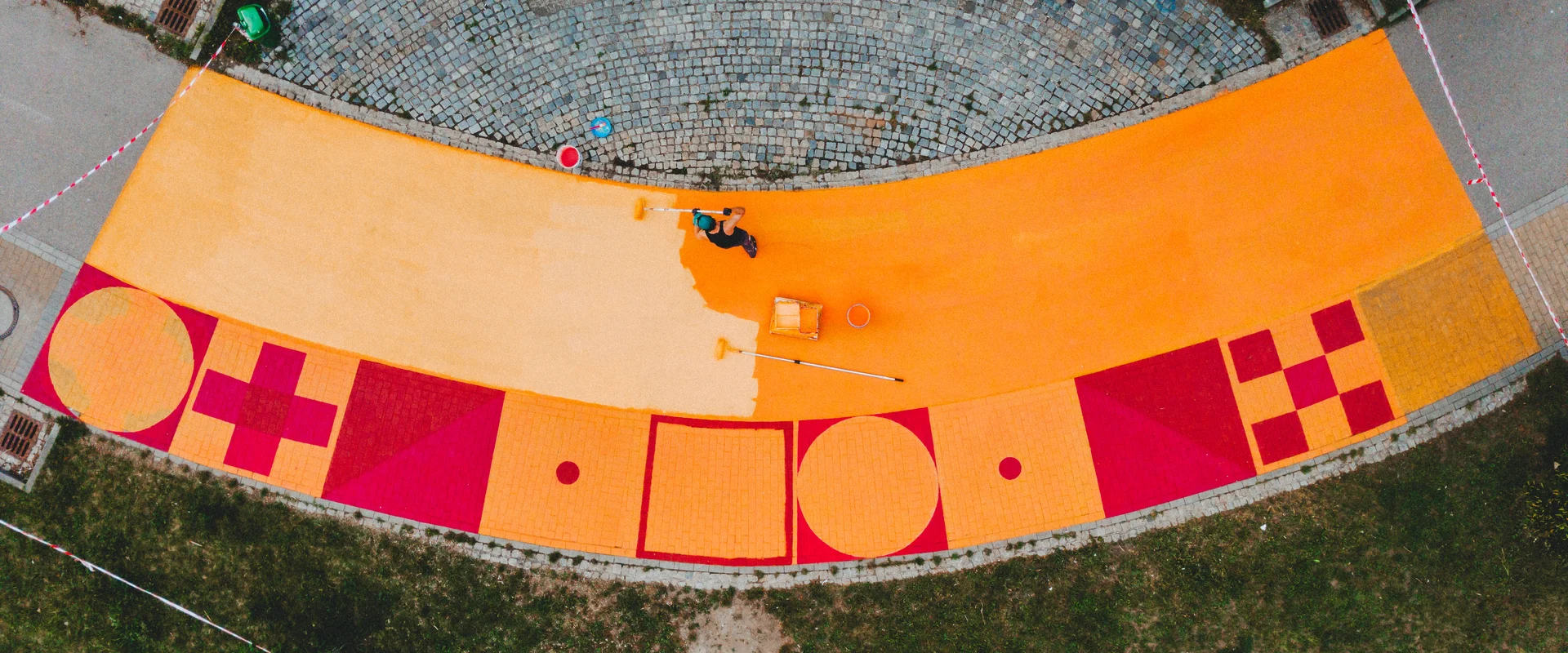
Consequently, the VIA Foundation’s strategy evolved over the ensuing months and years to champion systemic, grassroots restoration. They financed dozens of distinct community projects across the disaster zone, from the revitalization of playgrounds and civic clubhouses to communal tree‑planting initiatives and localized hydrological projects. By building upon the pre‑existing civic fabric of each municipality, the foundation empowered residents to reclaim, influence, and improve their devastated environment.
Further details can be found at: https://www.nadacevia.cz/promoravu/
Czech Radio Endowment Fund (Nadační fond Českého rozhlasu)
In partnership with the Radiožurnál broadcasting station, the Czech Radio Endowment Fund rapidly activated a charitable initiative titled “Pomáhejte s námi Moravě” (Help Us Help Moravia) on June 24, 2021. This complex operation featured a public collection and a specialized digital matchmaking platform designed to connect specific victims with willing donors. Individuals requiring transitional or permanent housing, material supplies, equipment, or skilled labor could broadcast their specific requirements, enabling donors to bypass intermediaries and assist families directly.
“The inspiration for creating the special website came from the model of our successful project Ježíškova vnoučata (Baby Jesus’s Grandchildren), which has long shown how powerful a role human solidarity can play. We created a space where people could help directly and with the assurance that their support would have an immediate and concrete impact,” says Jiří Váňa, director of the Czech Radio Endowment Fund.
The collection yielded CZK 21,588,000. These assets were distributed to direct victims and to non‑profit entities providing critical medium‑term psychosocial intervention. Beneficiaries included field operatives deployed in the hardest‑hit areas and educators managing the psychological fallout as children returned to school following the trauma.
“The tornado in South Moravia showed the enormous power of human solidarity. Although it was one of the saddest events of recent years, it was precisely the convergence of non‑profit organizations, local governments, volunteers, and thousands of donors that brought people hope at a time when they needed it most. It is a clear demonstration that when we join forces and work together, our aid can truly have an extraordinary impact,” states Jiří Váňa, director of the Czech Radio Endowment Fund.
Donio
Operating as a critical digital conduit, the Donio platform verified and facilitated 258 distinct collections, generating a total yield of CZK 85,510,830. This capital flowed to specific households, including the Macek, Procházka, and Marada families, among dozens of others, while also underwriting the reconstruction of civic assets, such as non‑profit athletic facilities, climbing walls, and a local church. The platform also enabled corporations to orchestrate targeted relief for affected employees.
How do Petr and Věroslava Marada look back on the help from Donio with the passage of time?
“The whole period was very hectic and psychologically demanding. So I will try to highlight the main thing. The collection from Donio came just like the tornado—unexpectedly, like a bolt from the blue. It came at a moment when we were tallying up the damage and basically did not know how to begin the repairs. Connection to the electrical grid was impossible for six weeks, so there can be no question of any ongoing tracking of the growing amount. Over time, generators and an internet connection were added, and my wife Věroslava kept me informed of the amount collected, which gave me a positive shock. Then, together with the whole family—including my mother, who lives with her husband on the first floor—we decided that we would not apply for the state contribution for repairing the house.
The amount collected and the speed with which it was gathered acted on us like a stimulant and gave us hope—not only financial but, above all, psychological—that we were not alone in this. It gave us the certainty that we could carry out the necessary repairs properly.
Looking back, I would probably highlight most of all the speed of the help and the fact that it brought us hope, which in the decisive moments was the engine of the repairs. We are young people who at that moment had to push hard, not only physically but also mentally. We live in a kind of community and on a street where there are many seniors who cried, were broken, and without us young people would not have managed at all. For me personally, it was also a commitment that we had to get through the whole situation and also help others—‘strangers’—since others and ‘strangers’ had helped us. The body can endure a lot of physical exertion, but the head has to be all right, and thanks to the Donio collection it was!”
Karel Komárek Family Foundation (Nadace Karel Komárek Family Foundation)
The Karel Komárek Family Foundation earmarked CZK 150 million to help people after the tornado. During the first six months, the foundation disbursed a total of CZK 35 million to 233 households. The remaining CZK 115 million was directed toward the long‑term restoration of the extensive Bažantnice area in Hodonín. This foundational support acted as a massive financial impulse for the town, which has worked or is actively working on 24 interconnected projects carrying a combined valuation of CZK 788 million.
“Coordination with other non‑governmental organizations and foundations immediately after the tornado played a fundamental role in our work. Thanks to close contact with colleagues who were directly in the field, we were able to make better decisions about where to direct the funds, thereby increasing the impact of the foundation’s support. We will remain in Hodonín at least until the end of 2030,” describes Luboš Veselý, director of the Karel Komárek Family Foundation, adding that the foundation also drew directly on this cooperative architecture during the national floods two years ago.
Aid from Other Organizations
The organizations listed above are not the only ones that became involved in aiding South Moravia after the tornado. Diakonie ČCE (the Diaconia of the Evangelical Church of Czech Brethren) paid out CZK 23 million to people from the municipality of Hrušky, and a further CZK 2.5 million was used for the revitalization of the municipality‘s public spaces.
Internal corporate solidarity also played a pivotal role. A collection among employees of the ČEZ Group generated CZK 2.7 million. The ČEZ Foundation doubled this amount, injecting over CZK 5.5 million into affected municipalities to bridge critical costs not covered by insurance payouts. Furthermore, the foundation triggered the immediate release of CZK 10 million in emergency crisis funding, bringing the ČEZ Group’s total aid in the Břeclav and Hodonín regions to CZK 15.5 million.
Simultaneously, the Relief Endowment Fund (Nadační fond pomoci), operating the donation platform Znesnáze21, raised CZK 16,404,639 and supported 60 households and institutions affected by the tornado. The fund joined forces with other entities that actively became involved in the relief so that the financial aid would be fast, efficient, and targeted.






Newsletter