Hexo: A Play Element That Children Co‑create
31. august 2026
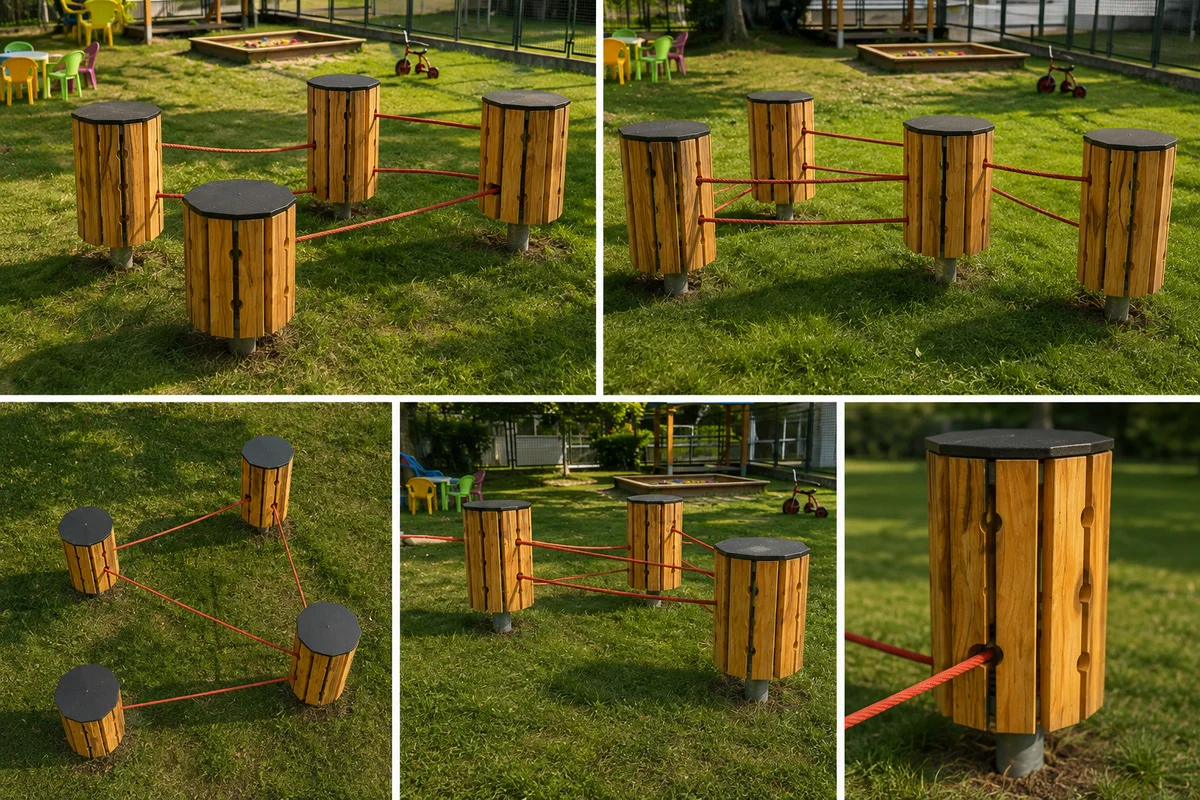
The HEXO play element was initiated by the Karel Komárek Family Foundation (KKFF), where we have long sought to change the way people think about using school gardens. We help restore gardens so that they can fully serve the all round development of preschool children and support their physical and mental health. The HEXO play element gives children the opportunity to change the form of the play space according to their own imagination. Through its variability, the element supports natural movement, creativity, independent decision making, and cooperation. HEXO will also be presented at Designblok 2026, where visitors will be able to learn about its principle and the opportunities it offers children.
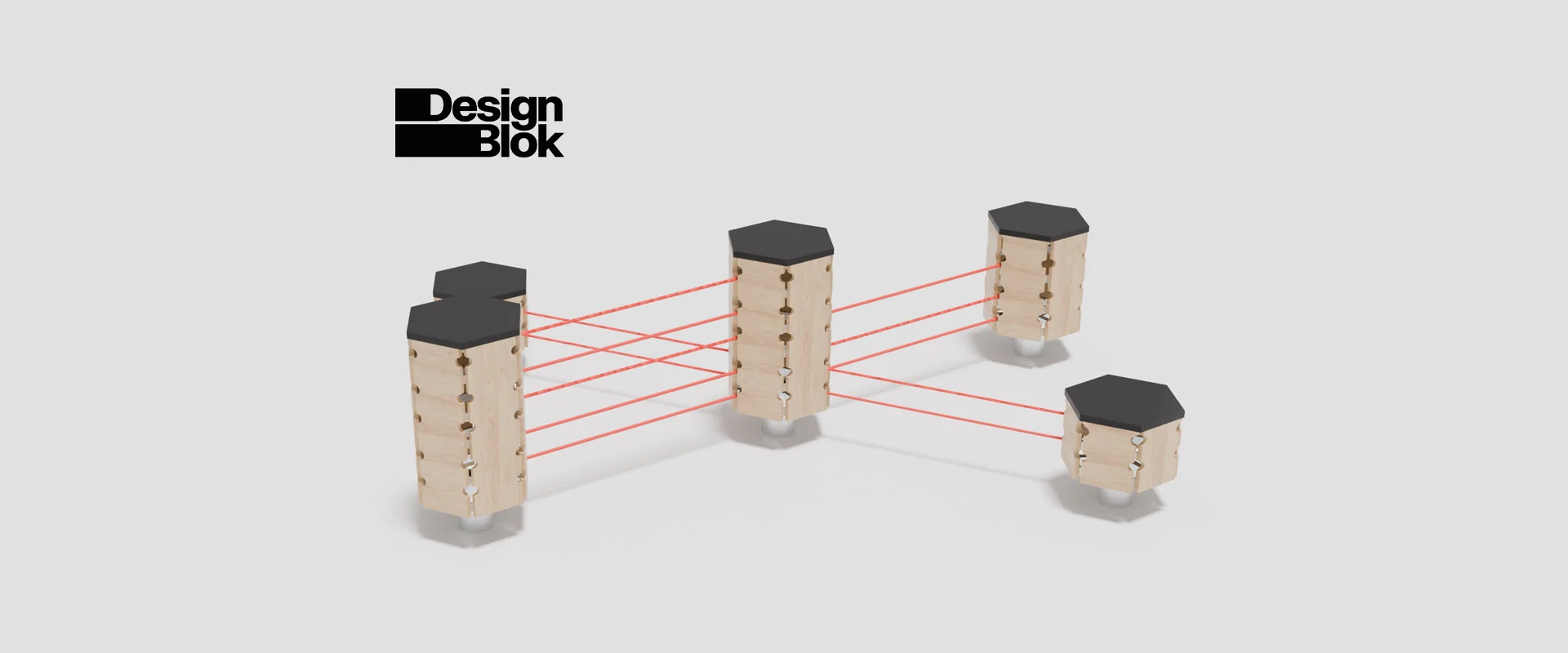
The Foundation approached design students from several Czech universities and, in cooperation with SKULL studio, organised a series of workshops focused on designing a play element for kindergarten gardens. The aim was to introduce the young generation of designers to the topic, show its complexity, and give participants experience of a real process of developing a play element.
Good Design Begins with Understanding
Experts from different fields took part in the workshops, including a designer, a certifier, teachers, and project implementers. Students were therefore able to learn about the full process of creating a play element, starting with understanding the needs of children and teachers, continuing with the principles of high quality play, and also including technical, safety, and certification requirements. An important part of the process was finding a balance between creativity, functionality, safety, and the possibilities of real production.
Based on the information and experience they had gained, the students were asked to design an innovative play element for kindergarten gardens that would be based on the needs of children and teachers while offering new opportunities for play and discovery. Another aim of the workshops was to introduce young designers to one of the topics the Foundation has long focused on.
„When professionally guiding the creation of the play element, I made sure that we gave the students a multidisciplinary and broader perspective on the children’s playground. I planned and structured the workshops to guide students through the complexity of disciplines, not only design, but also teaching practice and physical education. The greatest challenge for the participants was to deal with safety standards while not compromising on aesthetic quality.“

Co‑founder of SKULL Studio
„Children do not need just another play element. Above all, they need opportunities for movement, discovery, and shared play. HEXO is interesting because it does not offer one predetermined use. It gives children space to actively shape the form of play according to their imagination, current needs, and age. This openness and variability support motor development, creativity, independence, communication, and cooperation among children. I appreciate that the design was created through dialogue between designers, teachers, and other experts, and that it therefore reflects the needs of children as well as the kindergarten environment.” “

Sports Educator
The Winning HEXO Design: When Children Create Their Own Play
The winning design was the HEXO play element, created by Martin Bielik and Tereza Sedláčková from Tomas Bata University in Zlín. Their design works with the principle of variability and open ended play. The individual parts of the element allow children to actively co‑create the play environment according to their current needs, imagination, and way of playing. Children are therefore not only users of a finished play element, but can take part in shaping the space in which they play.
This variability is one of the main values of HEXO. The element offers space for both individual and group play and supports creativity, cooperation, communication, and independent discovery. Its open character also allows the way it is used to change naturally according to the children’s age and the specific situation.
How a Design Becomes Reality
The design phase was followed by prototyping and further development of the element in cooperation with Egoé. Students thus gained another unique opportunity to take part in the real development of a new product together with an experienced team of engineers and other experts. During this phase, they jointly looked for the most suitable material, structural, and technical solution that would respect the original design vision while meeting requirements for safety, durability, and real production.
The HEXO project therefore brings not only a new play element for kindergarten gardens, but also shows what successful cooperation between a foundation, students, designers, experts, and a manufacturer can look like. It confirms that involving young designers in a real development process can bring new perspectives and innovative solutions, while also giving them valuable experience of turning a design into a concrete, functional, and feasible product.


One Brief, Different Solutions
Student Competition Designs (CZ)
Presentation of five competing designs for a play element for kindergarten gardens.
Newsletter